A simple UK MVP typically costs £8,000–£30,000 over 8–12 weeks, while complex or regulated apps climb to £80,000–£300,000+ over 6–12 months. Recent UK pricing guidance makes the central point clear: the cost to develop an app depends less on the existence of an app and more on its complexity, compliance exposure, integrations, and delivery team.
That range is too wide to guide a serious SaaS budget on its own. A founder validating one workflow needs a different plan from a CTO building a multi-tenant platform with real-time data, secure payments, administrative tooling, and regulated information flows. The right question isn't “How much does an app cost?” It's “What business outcome must the product deliver, and what technical decisions are required to reach it predictably?”
What It Really Costs to Build an App in 2026
UK app economics split into distinct bands. A simple MVP or single-workflow product can sit at £8,000–£30,000 and take 8–12 weeks, while a standard SME production app generally falls at £30,000–£80,000 over 12–24 weeks. Complex or regulated products reach £80,000–£300,000+ over 6–12 or more months, according to the UK app development cost breakdown from Pocketworks.
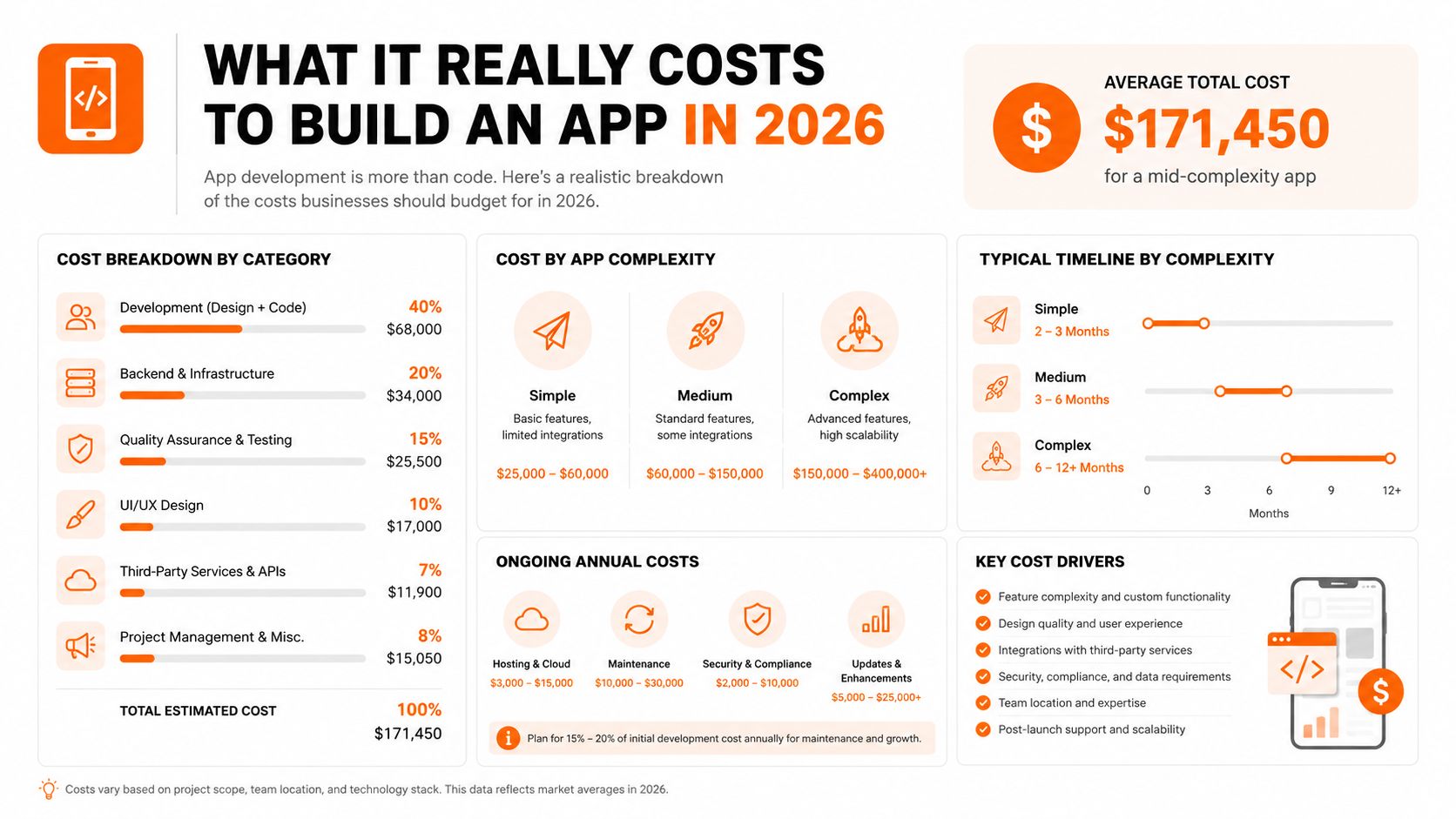
Those figures describe delivery shapes, not fixed price tags. A small product with a basic user journey may need limited backend work and few external dependencies. A production SaaS platform needs account management, data models, APIs, observability, deployment automation, support processes, and a roadmap for security and compatibility. Each addition changes the staffing profile and the number of decisions the team must make correctly.
The budget follows the outcome
Founders often budget for visible output, such as screens and features. That approach fails because the most expensive work often sits behind the interface. Authentication, permissions, data retention, payment processing, integrations, auditability, and operational resilience can require more effort than the front end users see.
A better cost model starts with the outcome:
- Validation: Can the MVP test a specific customer problem and produce evidence for the next investment decision?
- Revenue: Does the product support the payment, subscription, or sales workflow needed to earn money?
- Efficiency: Does automation remove a costly manual process or just digitise it without improving the operation?
- Scale: Can the architecture support the next stage without forcing a disruptive rebuild?
The UK pricing guide from Appscrip places lean MVP work around £10,000 at the starting end and enterprise applications at £80,000+, while describing a median UK app project around £60,000–£120,000 across London product-engineering houses. Those bands reinforce a practical lesson: your budget should reflect the value milestone you need to reach, not an arbitrary number of screens.
Practical rule: Fund the smallest product that can prove the business assumption, but don't label a production platform an MVP simply because the interface looks simple.
App Complexity Tiers and What Each Budget Buys
The cost to develop an app depends more on workflow complexity, backend depth, integration load, and compliance requirements than on screen count. A polished product with one workflow may cost less than a plain-looking service coordinating payments, permissions, live data, and several external systems.
| Tier | Cost Range | Timeline | Typical Features |
|---|---|---|---|
| Simple MVP | £8,000–£30,000 | 8–12 weeks | One core workflow, basic authentication, focused interface, limited integrations, essential analytics |
| Medium business app | £30,000–£80,000 | 12–24 weeks | Production backend, user roles, admin tooling, APIs, analytics, stronger testing and deployment controls |
| Complex or regulated platform | £80,000–£300,000+ | 6–12+ months | Multi-tenant architecture, real-time synchronisation, advanced integrations, secure payments, compliance controls, operational resilience |
Simple MVP
A lean MVP should answer one commercially important question. It may let users create an account, complete the central workflow, and produce an outcome the business can measure. Keep secondary roles, elaborate settings, complex reporting, and nonessential integrations out of the first release.
At this tier, the budget buys speed of learning, not a permanently complete platform. A two-person squad can work when the scope is narrow and founders make product decisions quickly. Choose a larger, more senior team if the first release requires enterprise security, several external systems, or a broad permissions model.
Medium business app
The middle tier catches teams that budget for a prototype but need a production service once customers depend on it. Admin tooling, permissions, analytics, API contracts, error handling, deployment automation, and support workflows then become required delivery work.
The broader 2026 UK cost guide from Pocketworks gives a national range of £23,780–£198,180+, identifying security, compliance, and integrations as major budget drivers. Plan for these items from discovery. A consulting-first nearshore partner such as Rite NRG can make the budget more predictable by defining the architecture, integration boundaries, and delivery sequence before implementation begins.
Complex and regulated platforms
Enterprise products pay for coordination and assurance. Multi-tenant data separation, audit trails, real-time synchronisation, bank-grade payments, live API feeds, and regulated data handling add design, testing, governance, and operational work.
Senior engineering leadership matters at this tier because early architectural choices affect every release. The budget buys evidence that the platform can operate under demanding conditions, not just completion of a feature list. Set aside time for integration testing, security review, deployment controls, and incident processes before committing to the build schedule.
Fund the smallest product that can prove the business assumption, but don't label a production platform an MVP because the interface looks simple.
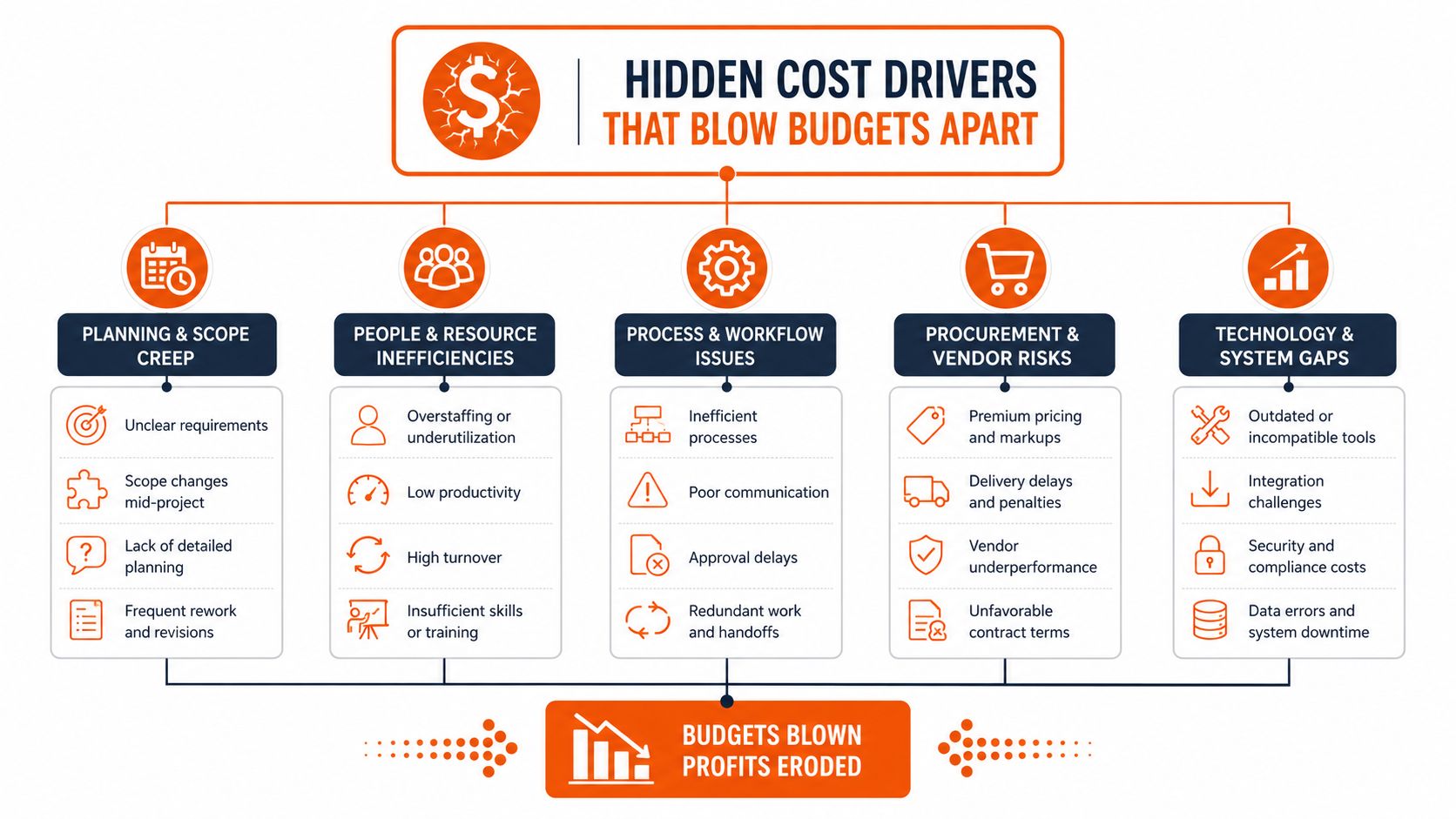
Hidden Cost Drivers That Blow Budgets Apart
A headline estimate can omit the work that determines whether the app ships safely and operates reliably. Compliance overhead, senior talent, and integration complexity need separate budget lines before the first sprint.
Compliance is delivery work
A 2024 UK government app developer survey estimated familiarisation with app-store security and privacy requirements at £7,143 for developers aware of the code and £3,343 for those unaware. It also estimated scoping, development, testing, and implementation of revised compliance processes at £18,882 for developers aware and £2,906 for those unaware, as reported in this UK app cost analysis.
Compliance can therefore add tens of thousands of pounds before the core feature set is counted. The survey recorded non-zero compliance costs ranging from £3 to £300,000. Its medians were £300 for familiarisation, £5 for legal costs, and £500 for scoping and development, according to the Digital Marketplace survey listing. The spread reflects uncertainty around policy interpretation, security reviews, and regulated data handling.
Senior capacity changes the maths
A UK government digital marketplace rate card quotes £850–£1,400 per unit-day for mobile app development. A two-person squad working 40 billable days implies roughly £68,000–£112,000 before QA, design, product management, hosting, or post-launch support, based on the government app developer survey and rate-card data.
Salary and contract benchmarks explain why a low headline estimate can mislead. A mobile developer averages about £45,075 in the UK, vacancy-based benchmarks for mobile application developers reached about £62,500 per year, and the reported median contract rate was £569 per day in 2025, up 62.5% year over year, according to the UK mobile developer salary benchmark.
Integrations multiply decisions
Real-time synchronisation, on-device AI, multi-tenant backends, secure sign-in, bank-grade payments, and live API feeds can move advanced UK builds from roughly £30,000–£60,000 into £120,000–£200,000+. Each integration adds failure modes, credentials, test environments, monitoring, vendor dependencies, and change-management work.
Set those boundaries during discovery. A clear project scope definition should record required integrations, data crossing each boundary, failure ownership, and assumptions awaiting validation. A consulting-first nearshore partner such as Rite NRG can make the budget more predictable by resolving those decisions before implementation begins.
The following video gives additional context on cost pressures beyond the visible feature list.
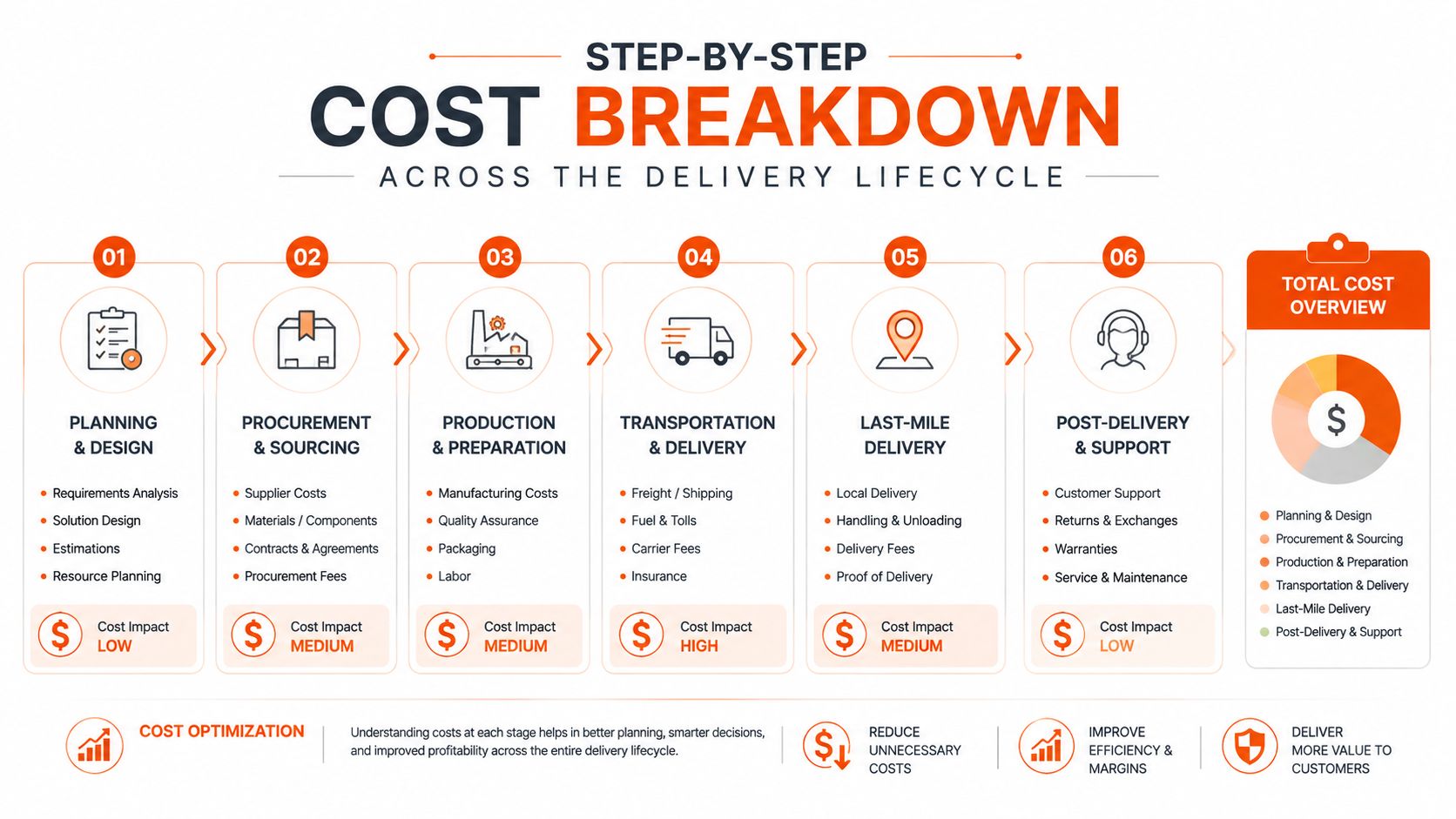
Step-by-Step Cost Breakdown Across the Delivery Lifecycle
Every delivery stage carries a distinct cost profile, and skipping discovery increases engineering spend downstream. Discovery protects the investment thesis, engineering creates the product, QA protects customer trust, and DevOps protects availability and release speed. A consulting-first nearshore partner such as Rite NRG makes these costs easier to forecast by resolving decisions before implementation begins.
Discovery and product design
Discovery turns an idea into a bounded decision. The team defines the target user, core workflow, success criteria, technical constraints, data responsibilities, compliance obligations, and release assumptions. Product design converts that understanding into user journeys, interaction models, and an interface that supports the intended behaviour.
Underfunding this stage forces developers to make expensive assumptions during implementation. You may receive attractive screens that leave the hardest workflow unresolved, while the backlog conceals compliance work, integration dependencies, and ownership decisions.
Frontend and backend engineering
Engineering creates the user experience and the systems that make it dependable. Frontend work covers interaction, state, accessibility, and device behaviour. Backend work covers data models, APIs, permissions, business rules, background jobs, audit requirements, and integrations.
Backend effort often determines whether a SaaS product can onboard organisations safely, report accurately, connect with customer systems, and extend functionality without destabilising existing users. Senior engineering input also matters early, because architectural shortcuts become expensive once data and customers depend on them.
QA, DevOps, and release readiness
QA requires more than a final bug sweep. Test coverage should reflect critical workflows, permissions, devices, integration states, and failure scenarios. DevOps adds deployment pipelines, environments, monitoring, logging, backups, and incident response practices.
A delivery partner should expose defects and operational risks while they remain cheap to fix. Delaying them until launch transfers cost into support, reputation management, and emergency engineering.
Maintenance after launch
UK app cost guidance commonly places annual maintenance at 15–20% of development spend, according to the SmartWorking's UK edition guide. Maintenance includes security updates, compatibility work, bug fixes, infrastructure changes, performance improvements, and product enhancements required to keep serving customers.
Include this operating cost in the original investment case. A launch without funding for maintenance can attract users without supporting them reliably. Plan ownership, monitoring, and update capacity before release so post-launch work remains predictable rather than becoming emergency spend.
Proven Strategies to Reduce App Development Costs
Cost reduction doesn't mean hiring the cheapest developer or deleting QA. It means removing avoidable work, sequencing risk intelligently, and paying senior people to make high-value decisions early.
Start with one measurable MVP outcome
Choose the smallest workflow that can validate demand, improve an internal process, or support a revenue conversation. Write down what evidence will justify the next investment. This prevents the team from building speculative features that feel useful but don't change the business decision.
A fast MVP still needs sound architecture at the seams. Keep the first release narrow, but don't ignore authentication, data ownership, error handling, and deployment discipline when customers will rely on them.
Use nearshore capacity deliberately
Nearshore teams can give UK organisations access to senior engineering capability with closer working hours and simpler collaboration than a distant offshore model. The saving comes from delivery efficiency as much as from the rate itself. Fewer handover gaps, faster decisions, and stronger product context reduce coordination waste.
This model works only when the partner accepts responsibility for outcomes. A low-rate team that waits for instructions can cost more than a senior team that identifies risks and resolves them early.
Reuse proven components
Use established identity providers, payment services, analytics platforms, design systems, and managed infrastructure where they fit the product's risk profile. Reuse reduces custom code and lets the team focus on the differentiating workflow.
Automation can also remove repetitive delivery work. Automation in software development is most valuable when it supports testing, release processes, documentation, and operational visibility rather than replacing product judgement.
Prioritise by business value
Rank every feature by the outcome it supports, the evidence behind the assumption, and the cost of delay. Defer features that add presentation polish without improving activation, retention, revenue, compliance, or operational efficiency.
The cheapest feature is the one you decide not to build until customers prove they need it.
Keep a visible decision log. When stakeholders request scope, record the expected outcome, dependency impact, and delivery consequence. That discipline protects the budget without turning the product team into a blocker.
Real Budget Scenarios and Case-Study Examples
The following are planning scenarios, not historical client case studies. They show how different product decisions shape a UK budget and where a delivery team should challenge assumptions.
Scenario one, a focused SaaS MVP
A SaaS founder wants to validate one customer workflow with a two-person nearshore squad over 10 weeks. The product needs a focused interface, basic authentication, a small set of core data entities, and limited analytics. The commercial objective is learning whether the workflow solves a real problem, not supporting every future customer segment.
The budget should sit within the simple MVP band of £8,000–£30,000, provided the scope remains narrow and the team has fast access to product decisions. The founder should protect discovery, user testing, and release readiness instead of adding advanced permissions or broad reporting.
The build an MVP fast approach works when the team treats speed as a way to shorten the feedback loop, not as permission to skip critical engineering.
Scenario two, a scale-up extending an existing product
A scale-up already has paying users and now needs an admin panel, analytics, and multi-tenant architecture. Those additions change the product from a feature set into an operating platform. Tenant isolation, role permissions, data migration, support tooling, and reporting require coordinated backend and product work.
This scenario belongs in the £30,000–£80,000 medium business app range, with the final position determined by the existing codebase, migration quality, integration depth, and reliability expectations. The cheapest path may be a staged release, beginning with tenant foundations and essential administration before broad analytics.
Scenario three, a regulated application
A regulated product requires security review, compliance work, auditability, and complex integrations. The team must clarify data flows, retention rules, access controls, vendor responsibilities, incident processes, and evidence required for approval. Those obligations can create substantial work before users see the principal feature.
The budget belongs in the £80,000–£300,000+ complex or regulated band, with a timeline of 6–12 or more months, as set out in Pocketworks' UK app pricing guidance. The right decision is to fund risk discovery early. Cutting that work only moves the cost into rework, delayed approval, or an unsafe launch.
How Rite NRG Makes App Delivery Predictable and Fast
Predictable delivery comes from combining senior judgement with clear ownership. The #riteway methodology is built around Extreme Ownership, high energy, and proactivity, so the team doesn't wait for a ticket or report a risk after it becomes a delay. It identifies the decision, proposes the path forward, and keeps the business outcome visible.
A consulting-first partner should help choose technology, shape the architecture, estimate delivery, and define the budget before implementation begins. Rite NRG offers Dedicated Teams, end-to-end platform development, technology and delivery consulting, and Build-Operate-Transfer services for R&D centres in Poland, including hiring, compliance, and operations.
Its stated delivery experience includes 100+ projects, 50+ SaaS clients, and a 4.9/5 Clutch rating, with AI embedded across recruitment, delivery, and operations. Those capabilities support a practical nearshore model for founders and CTOs who need senior engineers, transparent collaboration, and a controlled route from MVP to scalable product.
The objective isn't to produce more code. It's to reach the next measurable business milestone with fewer surprises, stronger technical decisions, and a team that takes responsibility for the result.
If you're planning an MVP, expanding a SaaS platform, or replacing an uncertain delivery model, visit Rite NRG for support with architecture, scope, team design, and budget planning. Bring your target outcome and current constraints, and ask for a delivery plan that makes the cost to develop an app explicit from discovery through ongoing operations.