Unlocking value with Agile in a legacy environment
A leading German B2B company partnered with Rite NRG to rebuild its legacy access control platform. Rite NRG integrated a multicultural nearshore team, reduced technical debt through refactoring and testing, implemented microfrontend architecture, and introduced Scrum. The collaboration delivered the MVP six months early, improved team velocity, and enabled adoption of 69% of recommended process and platform enhancements.
Introduction
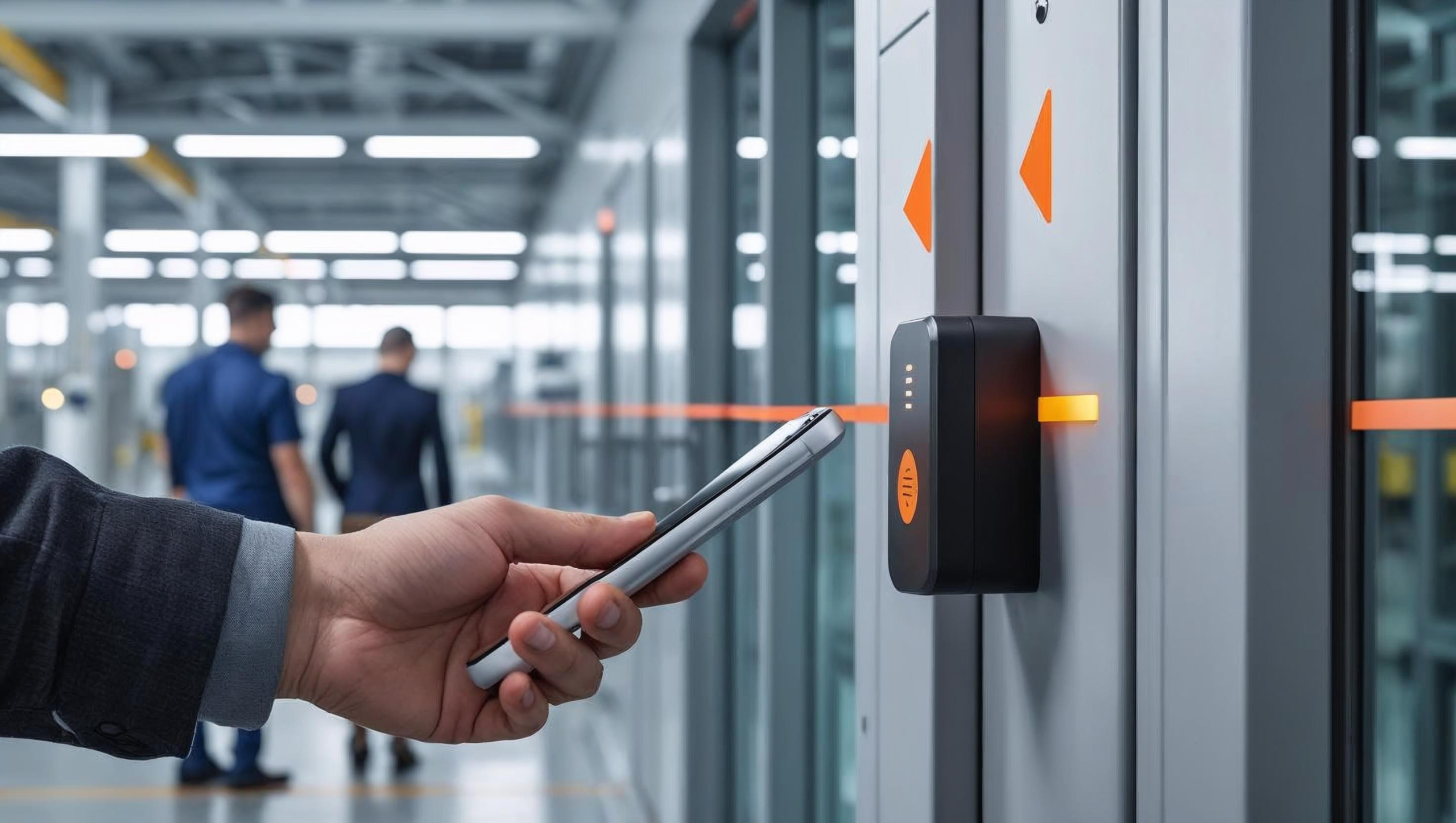
Our client is a leading German product company, employing over 500 people and serving thousands of customers worldwide, including critical infrastructure facilities like airports and power plants. Their core product was a B2B web platform providing physical access control and workforce management to their clients. Faced with an aging legacy system, and considering the critical nature of their clientele and the responsibilities involved, the client made a strategic decision not to upgrade the existing system but to develop a new, cutting-edge web platform in parallel from scratch. This new system was designed to manage digital identities and mobile credentials with enhanced security, privacy, and user experience, aligning with modern building management standards for operational efficiency and security (inspired by concepts in standards like EN 15232).
The Challenge:
The client’s new R&D Director faced the primary challenge of delivering an MVP for the next-generation platform. The project had seen minimal progress over two years, hindered by a need to transition from traditional methods to true Scrum. Key complexities included:
- Establishing effective delivery: The foremost challenge was structuring the development lifecycle to ensure the timely delivery of a viable MVP, which had been elusive. These processes also needed to be compatible with and integrate smoothly with the client’s existing departments, including R&D and Product Management, to ensure alignment and buy-in.
- Building a multicultural remote team: The project required harmonizing efforts and building a cohesive remote team that combined the client’s in-house personnel with external partners from diverse national and cultural backgrounds, including Germany, Spain, and Poland, creating a dynamic „explosive mix” that needed careful management to ensure collaborative synergy.
- Lack of experience with nearshoring: The client needed significant technical reinforcement, particularly in Node.js and modern Angular practices, but had no prior experience with nearshoring or managing external delivery partners effectively. This meant they were unsure how to best integrate and leverage external expertise.
- Addressing technical debt and skill gaps: The initial version of the new platform was burdened with significant technical debt. The in-house team required upskilling in specific technologies and an urgent focus on refactoring the existing new codebase.
- Designing for high availability: A key requirement was to create a system architecture that ensured high availability, critical for an access control platform managing sensitive operations.
- Meeting high security standards: The platform needed to manage sensitive functionalities like badge license management, mobile credentials, service accounts, multi-client support, and audit trails, all while adhering to exceptionally high security standards.
Rite NRG's Solution
To address these multifaceted challenges, our team was engaged to revitalize the project, injecting essential momentum and deep technical expertise. From the outset, our approach centered on establishing a collaborative, trust-based partnership, which proved pivotal in transforming both the development lifecycle and overall team dynamics. This grew into a deep and effective working relationship.
- Building trust and scaling expertise: Our engagement began with a small, dedicated team of two developers. This approach allowed us to organically integrate with the client’s in-house team, existing culture, and processes, fostering trust from the outset and ensuring our team was not perceived as process-heavy. The goal was to create one cohesive team with a shared objective—uniting our experts with the client’s in-house talents—rather than simply a group of experts working in tandem. As this trust and understanding deepened, our team naturally grew, with additional experts from our side joining to bolster the project’s capabilities. Ultimately, our people formed nearly half of the ~12-13 person integrated project team.
- Identifying bottlenecks and proposing enhancements: While not having full visibility into the client’s entire ecosystem, our focus was on improving the areas where we could make a direct impact. Our Solution Architect, in collaboration with our Project Manager, conducted a thorough analysis of the visible components, existing code, and processes. This diagnostic effort resulted in two comprehensive reports, detailing observations and actionable recommendations for implementation (e.g., „Suggestions for improvement” and an extensive „opportunities for a growth” r eport), which helped guide subsequent improvements and strategic decisions.
- Reducing technical debt: Our team championed and implemented crucial software development best practices. This included a dedicated focus on refactoring the existing codebase to improve its structure and reduce technical debt. We introduced comprehensive unit and E2E tests, standardized code with formatters and linters, implemented a microfrontend architecture using NX-workspace, and optimized the development environment through instance and pipeline enhancements.
- Improving team velocity: As the project evolved, an opportunity was identified to enhance process stability and the predictability of team output. Our role adapted to support this, with one of our experts stepping in as a Scrum Master to champion agile process facilitation. Through collaborative coaching, refining ceremonies like backlog refinements and sprint planning within a 2-week Scrum cycle, and embedding Scrum principles, the team’s ability to forecast and deliver work significantly improved. This led to a remarkably stabilized process, where sprint commitments became more aligned with capacity, and the team consistently achieved, and even exceeded, their planned velocity (e.g., Sprint 13 demonstrated this with 91 SP delivered against 47 SP committed), transforming predictability and overall throughput. This focused effort was supported by our people in Solution Architect and Product Owner roles, who helped streamline work organization, ensure focus on value delivery, and improve progress visibility through structured reporting.
Technologies Used
Node,js, Angular, Keycloak, Docker, Oracle Cloud, PostgreSQL, MongoDB, ElasticSearch, RabbitMQ, Unit Tests (Jest).
Results
A standout achievement of our collaboration was the successful release of the Minimum Viable Product (MVP), marking a significant turnaround for the project. This was the result of common focused efforts, particularly in the final stages where our team members made critical contributions. Ultimately, the MVP was completed in December 2024, over six months ahead of the initial July 2025 target, a testament to the revitalized development approach. Further key outcomes include:
- Rapid project initiation: Responding to the client’s imperative for a swift start, the project was launched and operational within one week of signing the contract, immediately injecting the required momentum.
- Effective Scrum implementation: We successfully implemented Scrum, which led to the team consistently delivering on their sprint commitments. Over time, the team’s velocity steadily grew, and all stakeholders gained significantly improved visibility into progress and timelines.
- High adoption of actionable recommendations: Our diagnostic reports provided clear pathways for improvement. The client actively engaged with these insights, implementing 69% of our targeted recommendations, which led to tangible enhancements in processes and platform development.
Read more case studies
See how our teams deliver predictable results in complex environments.
Frequently asked #questions
Clear answers to the most common questions about our delivery model and approach.
What makes the #riteway approach different?
Technical skills are a commodity; we focus on business outcomes. The #riteway focuses on cultural alignment, extreme ownership, and a "can-do" attitude, ensuring our teams act as an extension of your HQ, not just a list of external contractors.
How quickly can you scale a team for my project?
We are built for speed. We can typically move from staffing to full operational setup on remote premises within 1-2 weeks.
Can you help with a project handover from a previous vendor?
Yes. We specialize in seamless team handovers, ensuring comprehensive knowledge transfer through shadowing, training, and a gradual transition process to minimize risk and maintain stability.
Do you offer support for legacy systems?
Absolutely. We provide support and maintenance for both modern and legacy systems, adhering to ITIL best practices to ensure your applications remain reliable and efficient.
How do you ensure cultural fit between the remote team and our in-house staff?
Cultural alignment is our competitive advantage. We evaluate "energy-ego-drive" during recruitment and encourage the current team to select new members to maintain high synergy. We also organize monthly integration events at our Wrocław HQ to build solid bonds
Why should we choose a partner in Poland?
Poland is a global leader in IT services, ranked 3rd in worldwide programming skills. It offers a mature software market, high english proficiency (13th globally), and full compliance with EU regulations and GDPR.
Is Rite NRG "Remote Ready"?
We are 100% remote ready. Our infrastructure is built on secure, cloud-native platforms like G Suite and Microsoft Teams, ensuring seamless collaboration regardless of location.
Turn AI into real delivery impact
Your #Next-Gen-AI delivery starts here
As a nearshore delivery partner, we build and scale SaaS products using senior teams, strong culture fit, and AI to deliver up to 50% faster — without sacrificing quality or control.