Your collections team doesn't need another dashboard. It needs a system that stops missed payments from slipping through cracks, keeps legal steps defensible, and gives operators a live view of what is recoverable. If you're still juggling spreadsheets, inboxes, phone notes, and disconnected billing data, you already know the cost, slower recovery, more manual work, and more exposure every time a case moves from reminder to action.
The UK market is already telling you what to do. Debt collection software in the UK was estimated at USD 211.41 million in 2022 and projected to reach USD 328.58 million by 2027 at a 9.22% CAGR (Tovie AI report). A newer estimate put it at USD 255.07 million in 2024 and projected USD 657.78 million by 2033 at 11.1% CAGR (Tovie AI report). That is not a niche category. That is a software market moving because agencies and in-house teams are being forced to modernise.
The Tipping Point for Collections Technology
The broken version of collections is easy to spot. Agents chase the same accounts from spreadsheets, reminders go out late, payment history lives in one system while case notes live in another, and nobody has a clean audit trail when a file becomes legal. That setup does not just waste time. It leaks cash and creates unnecessary risk.
The point of no return arrives when manual coordination starts dictating performance. At that stage, collections leaders spend more time reconciling activity than improving recovery, and every exception becomes a fire drill. The right response is to own the operating model, choose a platform that fits it, and make delivery someone's responsibility from day one.
What the pressure looks like in practice
One team may focus on debt purchasers, another on contingency collections, but both run into the same operational drag, too many handoffs, too much manual reconciliation, too little confidence in the next action. The software decision is no longer a feature shopping exercise. It is a decision about Extreme Ownership of recovery performance, compliance posture, and operating cost.
Practical rule: if your team can't tell, from one screen, who owns the debt, what happened last, and what the next defensible step is, the platform is already failing you.
That is why the delivery strategy matters as much as the product choice. A CTO should scope the MVP around the few workflows that drive recovery and defensibility, then staff the build with people who will keep the project moving without excuses. A proactive nearshore partner like Rite NRG fits that model because it helps you stay close to the work, keep momentum, and turn platform decisions into shipped outcomes.
Core Platform Capabilities and Workflows
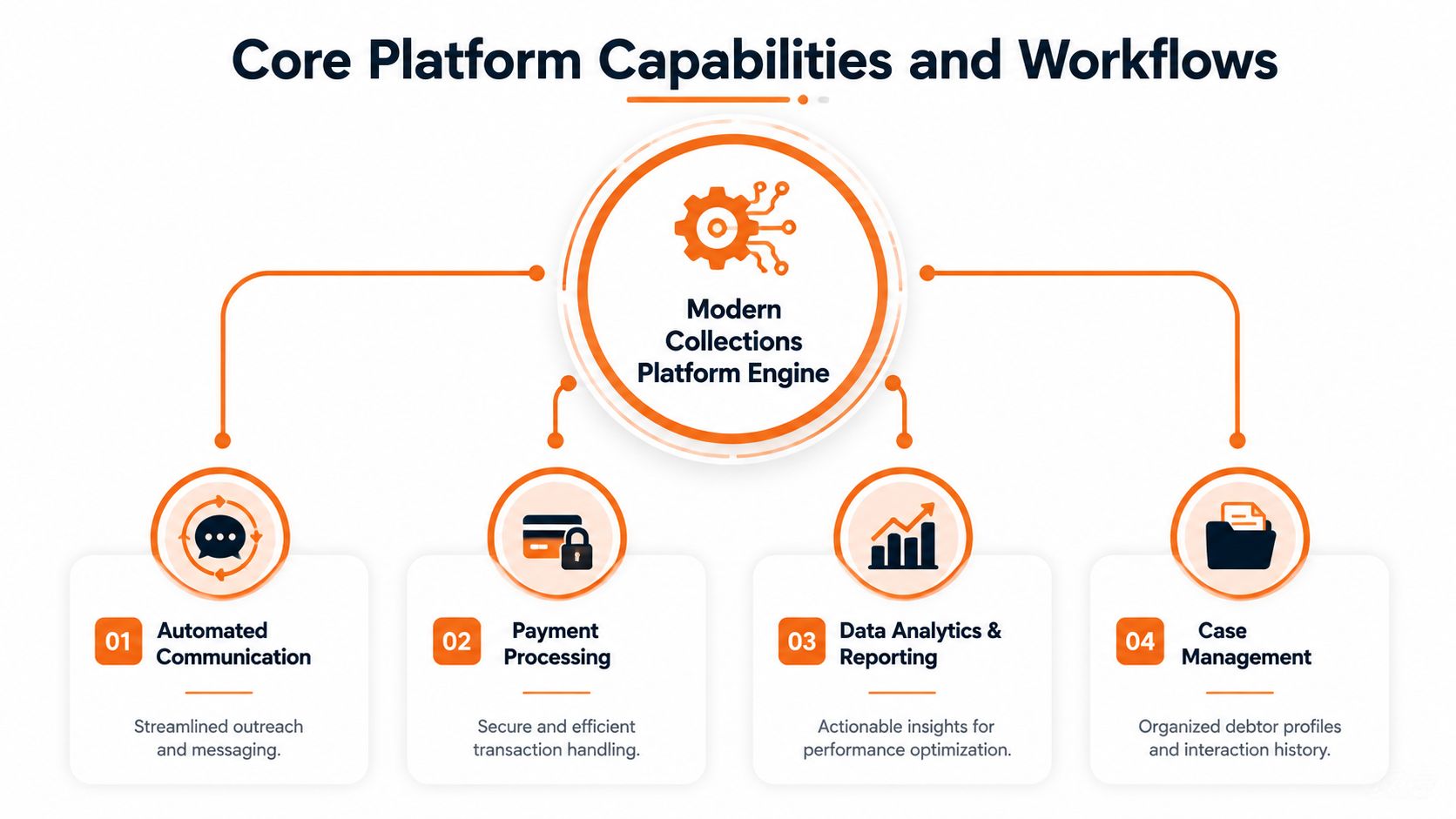
A collection platform earns its place when the full workflow stays connected. The right system does more than trigger reminders. It routes accounts, captures responses, posts payments, records every interaction, and keeps collectors working the exceptions instead of chasing routine follow-up. UK-oriented software is generally described as cloud-based and built to integrate with existing business systems so teams can see balances and missed payments in one place (Wise).
The execution model matters more than the marketing. If the platform breaks the work into disconnected tasks, collectors spend their time stitching the file back together. If the platform keeps the case moving in one flow, recovery improves and operational drag drops.
The core loop that actually moves recovery
Start with automated communication sequencing. Email, SMS, and dialler activity should work as one process, not as separate campaigns. The point is to reach customers through the channel they use, then move the account forward without a collector rebuilding the same sequence every day.
Case management is where the platform proves its value. A useful system groups accounts, keeps the interaction history intact, and makes the next-best action obvious. UK-facing platform coverage also highlights real-time reporting and analytics, including recovery rates, collector performance, and portfolio health (Emagia glossary). Managers cannot coach, prioritise, or forecast if they do not see the live state of the book.
Payment handling has to be built for action, not admin. If people can pay easily, they do. Embedded payment journeys cut friction, and that is what turns a promise to pay into cash received. The same applies to self-service portals, which let debtors act without waiting for an agent.
- Automated Communication: keep outreach consistent, timed, and tied to account behaviour.
- Payment Processing: remove friction from settlement and make payment the easiest action.
- Data Analytics & Reporting: show what is working, what is stalling, and where collectors should focus.
- Case Management: preserve the account story so no one has to rebuild it from scratch.
Modern platforms also need to support omnichannel collections, because rising digital expectations now demand smooth payment journeys, debtor self-service, and third-party coordination (Retrievables). That is why the platform choice should sit alongside delivery planning, not below it. A CTO should scope the MVP around the few workflows that drive recovery and defensibility, then staff the build with people who keep the work moving without excuses. A proactive nearshore partner like Rite NRG fits that model because it helps you stay close to the work, keep momentum, and turn platform decisions into shipped outcomes.
For a disciplined vendor review, use a structured approach like Rite NRG's guide to vendor due diligence. It keeps ownership on the buyer side and forces clear decisions before delivery starts.
A platform only improves recovery when outreach, payment, and case handling all point in the same direction.
Navigating UK Compliance and Security Mandates
UK collections software lives or dies on auditability. Generic automation fails once cases move through pre-legal, legal, and post-judgment stages. The platform has to preserve defensible audit logs and approval steps across those phases, especially when workflows touch County Court and High Court recovery (The Access Group).

Security is a workflow requirement, not a separate project
Treat security controls as part of the operating model. Role-based access, detailed logs, approval gates, and clear data lineage are what make an account file credible when a client asks who touched what, when, and why.
Compliance tooling has to be built into the product, not bolted on later. The market increasingly talks about GDPR compliance solutions, but the question for a CTO is whether the platform can operationalise policy every day, across every account stage, without adding friction for staff or blind spots for auditors. For a useful starting point on controls and vendor scrutiny, keep this vendor due diligence guidance close.
UK enforcement is where generic tools fall short
Many collections platforms stop at reminders and payment links. UK agencies need more. They need jurisdiction-specific workflow handling, evidence trails, and clean handoffs when an account crosses from recovery into legal action. Compliance is a product requirement.
If you are evaluating software, ask three blunt questions.
- Can it preserve a clean decision trail? If the answer is vague, move on.
- Can it separate legal steps from routine collections? If not, it will create operational risk.
- Can it support UK-specific enforcement workflows? If it cannot, you will end up forcing process around the tool instead of the tool supporting the process.
The strongest platforms make compliance visible, consistent, and easy to prove. Anything less is a liability disguised as software.
The Strategic Build vs Buy Decision Framework
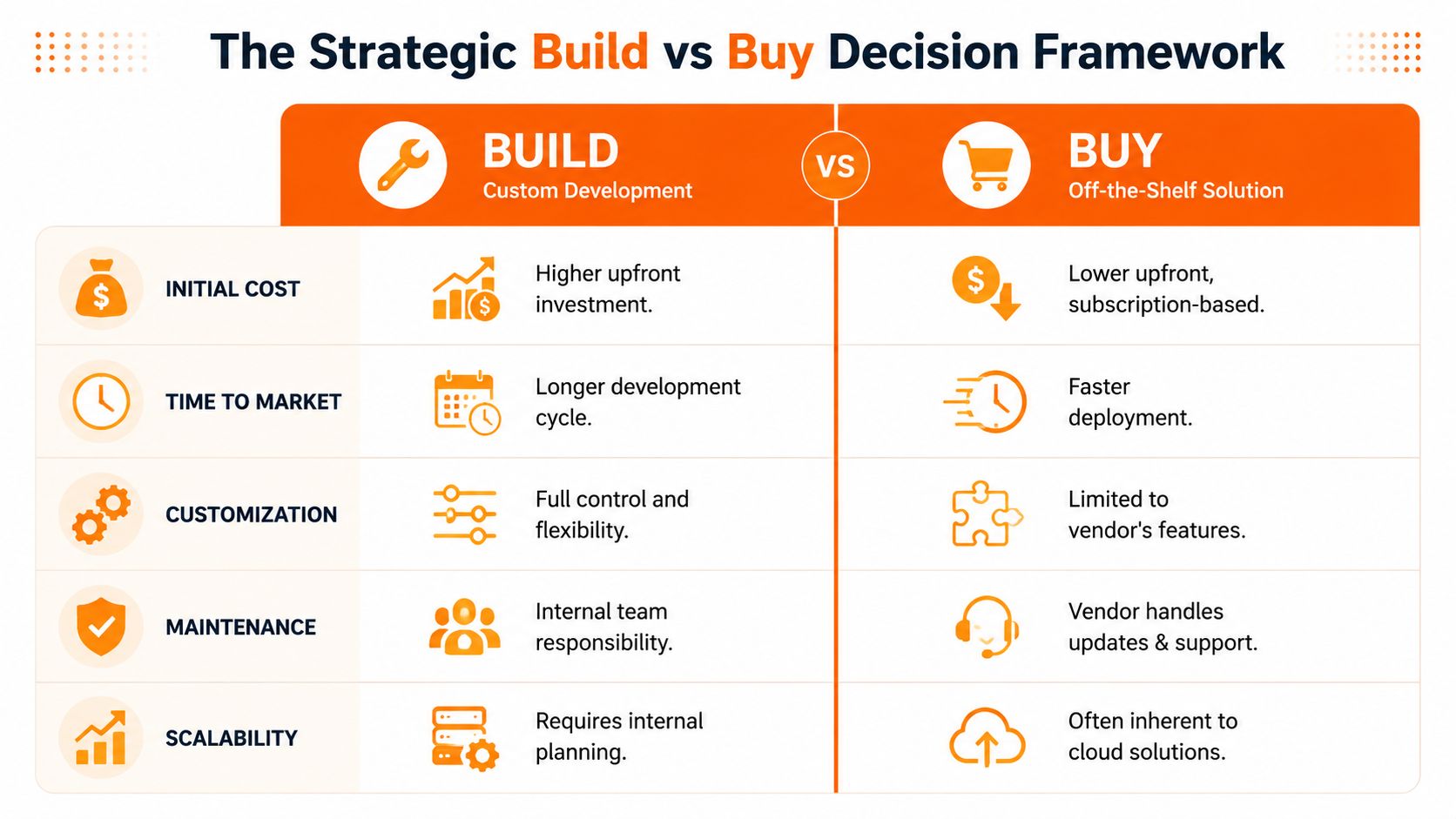
The build vs buy question gets messy when teams treat it like a philosophy debate. It isn't. It's a business-model decision. The right answer depends on how your agency makes money, how much differentiation you need, and how much operational complexity you're willing to own.
Choose build when your model needs control
The UK agency split matters. Debt purchasers buy portfolios below face value and need software that handles portfolio valuation and recovery accounting. Contingency agencies collect on behalf of clients and care more about client management and fee calculation (IBISWorld). Those are different architectures. If your revenue model depends on unique handling of one of those paths, building may be justified.
Build also makes sense when your process is a differentiator. If your segmenting logic, approval flow, or internal accounting treatment is core to how you win business, you don't want to be trapped inside someone else's product assumptions. A custom platform gives you control over the rules, the roadmap, and the pace of change.
Choose buy when speed and standardisation win
Buy is the right call when you need a working platform fast, your workflow is close to market standard, and you want the vendor to carry updates and support. That route usually wins on time to market and lowers internal maintenance burden. It's especially sensible when your team would otherwise spend months recreating commodity features like reminders, dashboards, and basic payment flows.
My rule: if the software isn't a source of competitive advantage, don't build it just to feel in control.
For a deeper operational lens on outsourcing and delivery trade-offs, this internal read is worth your time, IT and outsourcing considerations. The point isn't to outsource judgement. It's to make sure you're buying the right kind of capability for the outcome you need.
Use a simple decision filter
- Build if your workflow is unique, your accounting logic is complex, and the platform itself is strategic.
- Buy if you need speed, proven capabilities, and lower maintenance overhead.
- Hybrid if you need a strong base platform but still want proprietary modules around scoring, legal handling, or client reporting.
The worst outcome is a half-built system that nobody fully owns. That's not strategy, that's debt.
Scoping a High-Impact MVP Architecture
A strong MVP for collections software is narrow, focused, and built to prove value fast. It should validate the core recovery flow without locking you into a dead-end architecture. Start with the workflows that cut the most manual effort and give your team immediate operational feedback.
Build the smallest system that can actually collect
The MVP should cover case creation, automated reminders, and a simple payment integration. That gives you enough to confirm whether the account flow works, whether customers respond, and whether staff trust the system. Keep fringe features out of the first release. Anything that looks good in a demo but does not improve recovery belongs in a later phase.
The architecture still has to be designed for extension from day one. High-value platforms need deep API or data-integration layers across billing, CRM, and payment systems so automated segmentation, workflow routing, and customer-level action plans can run without manual reconciliation. That is how you keep operations clean and avoid building a brittle first release. For a practical planning lens, the SaaS platform architecture guidance is useful when you are defining how the platform should scale without rework.
Keep the technical shape simple and scalable
Use cloud-native infrastructure, whether that is AWS or Azure, and keep the early design modular. A microservices approach works well when you need to separate communication, case logic, payments, and reporting. It also protects the roadmap, because one change does not force a rewrite across the whole platform.
A strong MVP architecture should do four things well.
- Ingest clean account data: if the input is messy, every downstream process suffers.
- Trigger the right workflow automatically: reminders, escalations, and payments should not depend on manual chasing.
- Expose a live customer view: collectors need to see status, history, and next action instantly.
- Integrate without drama: CRM, billing, accounting, and payment tools should connect through a proper API layer.
That is the standard you should hold the build to. If the platform cannot do these four things reliably, it is not ready for production use.
The best MVPs feel small at launch but are built to survive growth. That is the right trade, get value quickly, then extend the platform without having to rebuild it.
Your Implementation Roadmap and Delivery Team
A collections platform fails when delivery is treated as a side project. The roadmap has to be explicit, sequenced, and staffed by people who own outcomes, not just tickets. If you want predictable delivery, the team structure matters as much as the code.
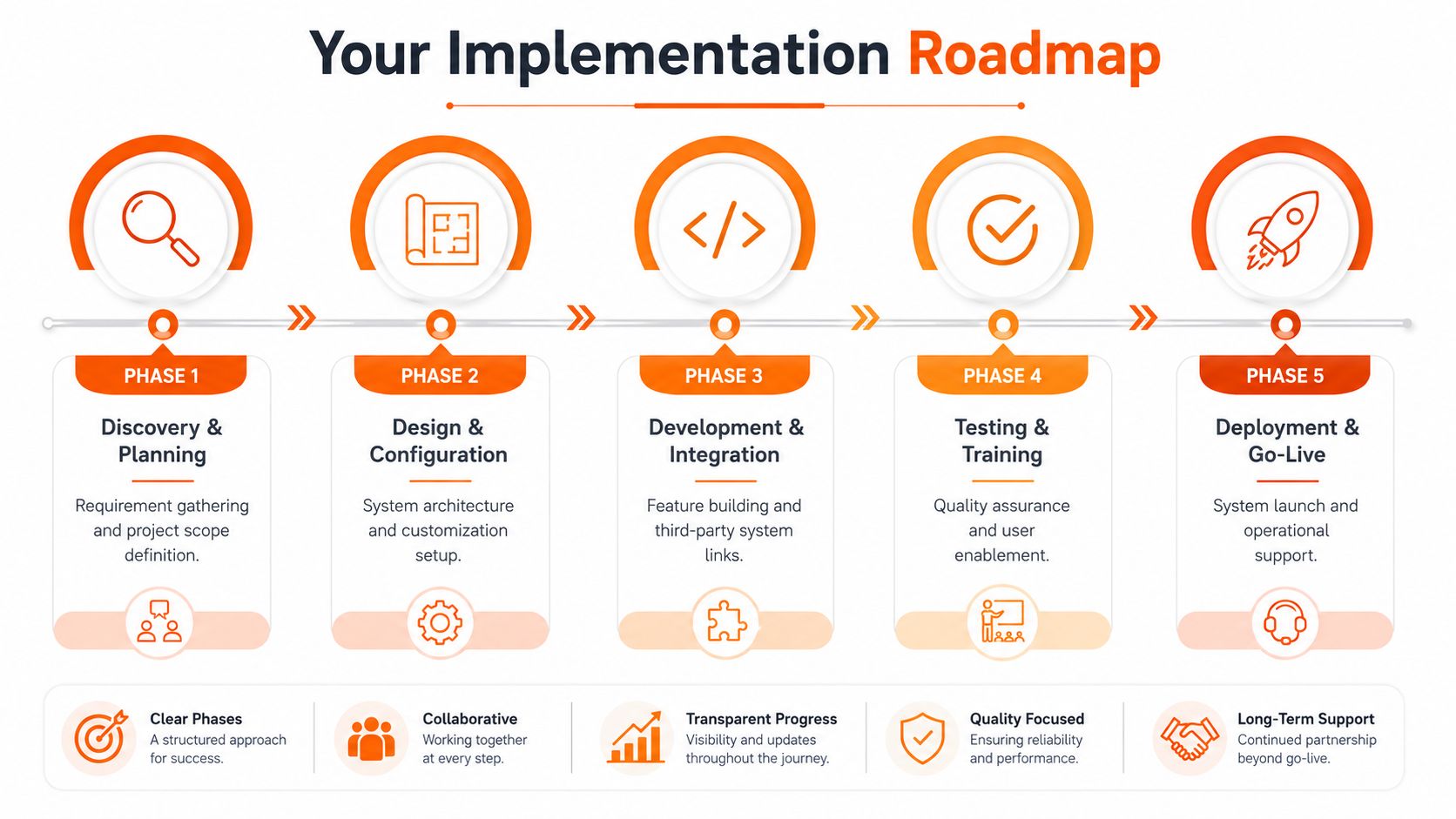
The phases should be boring in the best way
Start with discovery and planning. That means gathering requirements, mapping current workflows, and deciding what the first release must prove. Then move into design and configuration, where the process, data model, and integration points get locked down.
Development and integration should follow quickly, not drag. The main risk here is overbuilding before the team has validated the day-to-day flow. After that, testing and training become the primary hurdle, because collectors can't adopt a system they don't trust. Final deployment should include operational support, not a handoff and hope.
Staff the project for speed and ownership
You do not need a bloated team. You need a sharp one. A dedicated Product Owner, senior front-end engineer, senior back-end engineer, and QA specialist can move a focused MVP faster than a larger group with unclear accountability.
That's where the #riteway mindset matters. Extreme Ownership means every person is responsible for the outcome, not just their task list. Proactivity means risks surface early, dependencies don't sit ignored, and decisions move without waiting for bureaucracy.
Delivery rule: if nobody owns the handoff between product, engineering, and QA, the project will drift.
A proactive nearshore team can accelerate the work because it brings senior capacity without forcing you to rebuild your management model from scratch. That's valuable when you need fast iteration, predictable communication, and a team that behaves like part of your company, not a distant supplier.
The right delivery model makes launch less stressful, not more ambitious. That's the difference between a platform that lands and one that limps.
Taking Extreme Ownership of Your Delivery
A collections platform only creates value when the delivery plan matches the operating model. If your teams still depend on manual handoffs, inconsistent workflows, and unclear ownership, new software will automate the chaos. The core decision is whether you want a system that reinforces weak habits or a programme that fixes them.
Choose software that fits how your business collects, reconciles, and reports. Build only the parts that create real differentiation, such as a workflow tied to your specific accounting logic or recovery process. Everything else should move quickly into standard configuration, because time spent customising basic functions is time lost on adoption, integration, and compliance.
Extreme Ownership turns that decision into execution. You define the workflow, lock the MVP scope, assign clear owners, and insist on a delivery model that exposes risk early instead of hiding it until go-live. That means the product owner, engineering leads, and QA all carry responsibility for the same outcome.
If your current setup is slowing recovery, creating manual rework, or making compliance harder than it should be, fix the operating model first. A serious partner should help you do that with urgency, discipline, and senior engineering capacity. A proactive nearshore team like Rite NRG gives you that ownership, keeps decisions moving, and acts like part of your business from day one.