You're staring at a vendor's MSA, legal has forwarded a redline, and procurement wants momentum. Meanwhile, the business needs delivery to start now, not after three more rounds of line edits. That's the trap in most software contract negotiation work: the team thinks it's negotiating paper, while the actual outcome is being set by vague scope, weak acceptance criteria, and handover terms nobody will track after signing.
The right move is to treat the agreement as an operating model for a delivery relationship. In UK-facing deals, the loudest arguments often cluster around limitation of liability, price, and indemnities, while operational terms like scope, delivery, and performance decide whether the contract works in practice, as summarised from WorldCC's 2024 research in this guide to cross-border contract terms. That's exactly where a consulting mindset matters. You're not trying to “win” a document, you're designing a predictable commercial system that can survive pressure, change, and the occasional bad week.
Why Most Software Delivery Contracts Fail Before Signing
A founder can read a 30-page MSA and still miss the clause that will wreck the project. That's because the pain rarely sits in the biggest legal words, it sits in the weak operational ones. If acceptance is vague, if remediation isn't timed, and if handover is undefined, the contract gives you permission to argue after the work is already delayed.
The real failure is misalignment, not legal text
WorldCC's 2024 research, as summarised in the UK-focused contract terms guide above, points to the same pattern. Limitation of liability gets the most attention, followed by price and indemnity, yet practitioners still say scope, delivery, and performance determine whether the deal succeeds in practice. That's the core lesson for SaaS and nearshore delivery. A contract can look heavily negotiated and still fail the moment engineers, product owners, and support teams start operating against different assumptions.
Rite NRG's #riteway approach starts from the opposite premise, Extreme Ownership means the delivery partner helps define how the contract will work in practice, not just how it reads in the legal file. That means the negotiation has to connect commercial terms to measurable business outcomes, like release readiness, acceptance windows, defect response, and escalation paths. If you don't translate intent into controls, the signed deal becomes a hope document.
What to do instead
Use the contract to force clarity on the work that matters. That means asking, before signature, who owns what, how completion is judged, and what happens when a milestone slips.
- Scope clarity: define deliverables tightly enough that both sides can measure progress without debating meaning later.
- Operational acceptance: make sure the business can reject or accept work against observable criteria, not mood or convenience.
- Handover discipline: require the deal to support the teams that will manage it after launch, not just the lawyers who review it.
The contract should reduce ambiguity for delivery teams, not just reduce legal risk for counsel.
If you want a practical view of how structure changes when buyers and suppliers cross borders, use the guide to cross-border contract terms as a reference point, then map those ideas back to your own delivery model. That's the difference between signing a deal and building a relationship that can ship.
Preparing Your Negotiation Position Before the First Call
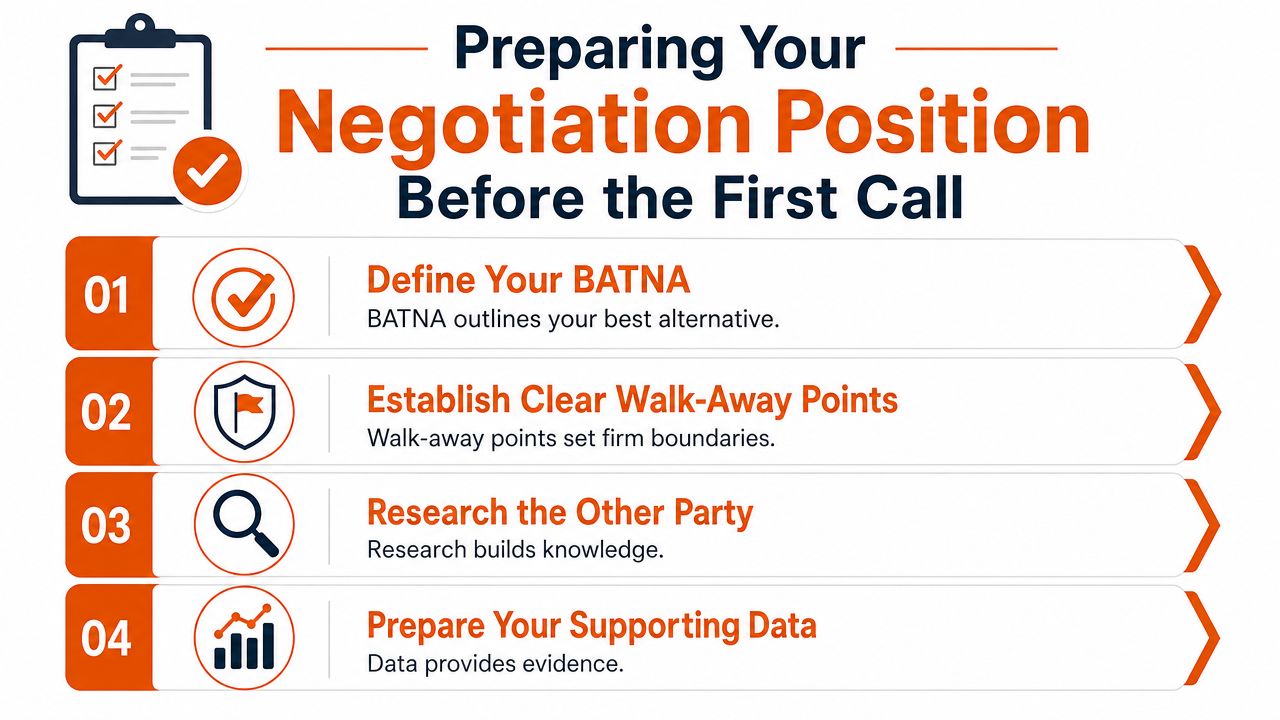
The first call is usually where weak deals are set in motion. Someone says, “We'll sort the details later,” and the vendor takes control of the conversation with a standard template. Stop that pattern before it starts. Write your position first, then enter the call with a clear line on every issue that affects delivery, cost, risk, and control.
Lock your BATNA and your walk-away points
Thomson Reuters advises in-house counsel to prepare a written deal playbook with a point-by-point position map, a preferred landing zone, and a walk-away point for each issue. That discipline matters because BATNA, your Best Alternative to a Negotiated Agreement, is what keeps you from accepting a weak outcome just because the calendar is tight or the team is tired. Ironclad makes the same case. If a deal misses your minimum requirements, walk away and keep looking.
Your issue list needs to cover the terms that shape delivery, not just the legal language that looks important in review. For a SaaS or nearshore engagement, that means technical scope, pricing, IP ownership, liability caps, acceptance criteria, delivery timelines, and any jurisdiction or regulatory issues that affect where the work can operate. If you are working through cross-border structure or startup setup, include registering your startup with the 28th regime in the preparation phase, because entity and jurisdiction choices change what you can credibly ask for at the table. If you cannot state your minimum acceptable outcome on each item, you are not prepared.
Build the file before the call
Facts beat preferences. Scotwork treats negotiation as trading value using concrete inputs like market data, costs and margins, historical performance, and delivery timelines, and that is the right model for software contracts too. If a supplier wants a higher fee, you need to know whether the request reflects real capacity pressure, added scope, or simple pricing power.
Use a simple preparation stack:
- Write the issue map. Put every material clause in one document, with your preferred position, fallback, and hard stop.
- Collect evidence. Bring market rates, previous delivery performance, capacity assumptions, and business deadlines.
- Set trade boundaries. Decide what you will concede only if the other side gives something back.
- Prepare your opening. State the business outcome you need, then use the evidence to support it.
If you are still choosing a partner, use this internal guide on how to choose a nearshore partner before commercial talks begin. The wrong partner turns negotiation into damage control, because every clause becomes a proxy for trust.
The infographic above works because it forces sequence. First, know your alternative. Then define the boundary. Then assess the counterparty. Only then should you start trading value.
Practical rule: if you cannot explain why a clause matters to delivery, you have not prepared enough to negotiate it.
If any AI-assisted work is in scope, add that to the issue map too. The conversation is not just price or timeline. It also covers who owns outputs, how data is used, where model-related risk sits, and what happens if the system changes the work after handoff.
Negotiating Delivery Outcomes Instead of Isolated Clauses

Point-by-point redlining creates the illusion of control, but it often leaves you with a contract that looks tidy and performs badly. One team rewrites scope, another softens acceptance, a third trims handover language, and nobody checks whether the terms still support a workable delivery process. The result is legal neatness and operational confusion in the same document.
Bundle the terms that drive one outcome
Technical scope, acceptance criteria, defect remediation, escalation paths, and handover need to move together as one commercial package. Thomson Reuters specifically warns against resolving issues one at a time, and that warning fits software delivery perfectly, because a win on one clause can hide a loss somewhere else. You might secure a better liability cap, but if the acceptance window is vague and remediation timing is missing, the business still absorbs delay and rework.
The better approach is to negotiate the delivery model in parallel. If the vendor wants flexibility on scope, ask for tighter acceptance terms. If pricing goes up, ask for clearer remediation commitments or stronger milestone governance. If they want lighter handover obligations, push for sharper operational escalation and named owners. That is not being difficult. It is making sure the package still produces the outcome you need.
Use value trading, not clause worship
Scotwork's fact-based negotiation approach fits this work. You are not debating clauses in isolation, you are trading value using delivery metrics, capacity constraints, and market context. If your team needs a faster release cadence, that is the business outcome. If the partner needs a longer mobilisation window, that is the commercial reality. Put both on the table together.
A lot of internal inconsistency comes from the same mistake. Legal approves one reading, delivery assumes another, and finance signs off on a commercial model that no one can run. That is why the contract has to work as one system. If the delivery process depends on a handover from engineering to operations, the handover language must say that plainly. If remediation changes launch risk, the timing has to be explicit.
The process flow in the infographic is the right discipline. Bundle the scope. Link acceptance. Package defect resolution. Then build integrated commercial terms that support the business instead of fragmenting it.
If you need a practical way to keep this disciplined while writing the statement of work, use the SOW development guide to keep scope, assumptions, and acceptance in one document. That is where delivery outcomes start becoming enforceable.
Must-Have Clauses and Red Flags in Modern SaaS Contracts

Video for deeper context:
Standard SaaS paper usually looks harmless until the first incident hits. Then the gaps show up fast. If the agreement does not clearly cover service levels, data portability, termination assistance, or AI-specific rights, you are carrying far more risk than the template suggests.
The clauses you should never compromise on
Start with the clauses that keep delivery on track. Clear IP ownership matters when a vendor produces customised code or AI-assisted outputs. Data portability matters when you need to move providers without losing operational momentum. Limitation of liability matters because uncapped exposure is rarely acceptable in software delivery, especially when one supplier controls critical dependencies.
AI delivery raises sharper issues. Generic contract advice still focuses on term and service levels, but AI-enabled work creates harder questions around who owns outputs, who can reuse prompts or data, and who carries liability if the AI-assisted work fails. That risk is not theoretical. The UK government reported 1.5 million business-led AI users in 2024 Upland Software's summary of UK AI use. The ICO also expects controllers to stay accountable for compliance when AI is used, so procurement and governance cannot treat AI clauses as optional extras.
Red flags that should slow the deal
Some clauses are noisy. Others are dangerous because they look routine.
- Vague acceptance windows: if the buyer cannot measure what “done” means, disputes are coming.
- Missing defect remediation timelines: defects without time commitments become open-ended delay.
- One-sided termination language: if only the supplier can exit cleanly, the buyer carries transition risk.
- Overly broad indemnities: broad wording can create obligations far beyond the business case.
- Unilateral change clauses: if the supplier can change terms or service behaviour on its own, control is an illusion.
The contract should reflect the same operational detail that appears in the working documents. If the delivery plan has milestones, the agreement should too. If the vendor is expected to support a transition, say that plainly. Use the SOW development guide to keep scope, assumptions, and acceptance aligned in the statement of work. That is where delivery outcomes start becoming enforceable.
If your team also needs to negotiate better supplier contracts, the same discipline applies. Tie commercial terms to actual delivery risk, not to what sounds clean on paper.
Important: if AI is in the workflow, the contract should cover data use, model training restrictions, output ownership, and liability for AI-assisted failure before anyone signs.
Many software buyers still get sloppy. They accept broad vendor-friendly language because the project feels urgent, then spend the next six months discovering the contract never protected the way the team works.
Tactical Moves That Shift Leverage in Your Favour
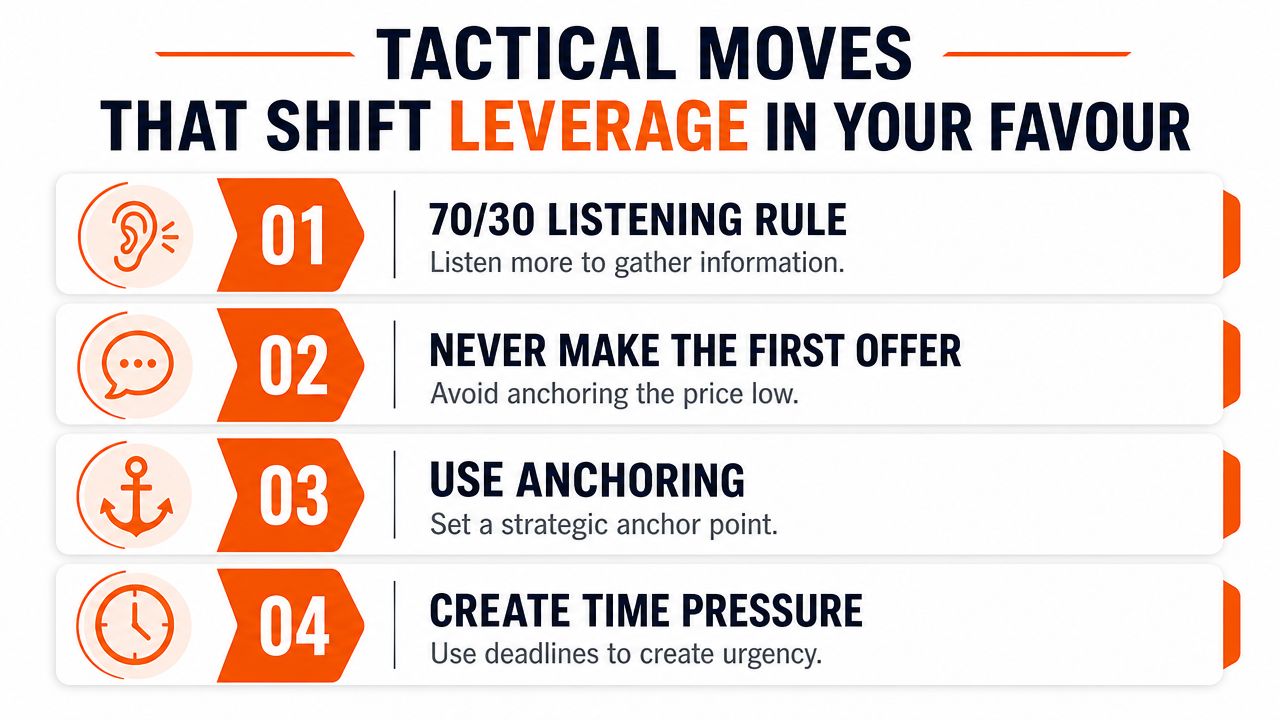
If you walk into a negotiation talking too much, you hand away power. The vendor learns your priorities, hears your pain points, and starts steering the conversation. The fix is discipline, not theatrics.
Use listening and concession mechanics properly
Ironclad's rule is simple, spend 70% of the negotiation listening and 30% talking. That ratio works because the other party will tell you where they're flexible, where they're boxed in, and which terms really matter to them if you let them speak. Pair that with another hard rule, never make the first major concession, and don't give away value unless you're getting something back.
Queensland's procurement guidance says to Always pair concessions. That's the right habit. If you agree to a lighter payment schedule, ask for something in return. If you offer flexibility on delivery timing, ask for better support or tighter remediation. The deal should stay balanced.
Push back on pricing with facts
When a supplier asks for a price increase, don't debate the headline number. Ask for a breakdown. The Wisconsin procurement guidance is unusually practical here, it says negotiators should require a supplier to provide a breakdown of “5 Buckets” before agreeing to price increases, only accept increases for categories provided, and tie the change to documented manufacturer or market-index movement. That turns a vague price demand into a reviewable cost structure.
The same logic helps when procurement time is compressed. If legal, security, and commercial review are all happening at once, slow down the parts that matter most and keep the rest moving. Don't let urgency force a blanket yes. Keep the conversation narrow, factual, and tied to business consequences.
If you need another way to sharpen supplier-side discipline, the negotiate better supplier contracts guide is a useful reference for pressure situations where you need cleaner trade-offs and firmer boundaries.
Hold the line on price until the supplier explains the cost driver. Silence often does more work than a long speech.
High-energy, proactive delivery teams outperform passive ones. They don't just ask for a discount, they trade intelligently and document the basis for every move.
Turning Signed Contracts into Operational Governance
Signing day is the handoff point, not the finish line. If the agreement goes into legal storage after execution, the business slips back into ambiguity, and the work you did in negotiation leaks out through missed obligations, unmanaged renewals, and weak ownership.
Translate paper into controls
Sirion's contract-negotiation workflow explicitly includes post-signature handover to contract management teams so obligations, milestones, and renewals are tracked operationally, not just legally. That is the right model. Your signed terms should become live controls, not archived promises. Service levels should map to monitoring. Acceptance windows should map to release gates. Defect remediation should map to named owners and dates. Renewal triggers should sit where finance and delivery can see them.
Legal, finance, and delivery also need one final pass before signature. Sirion stresses that agreed language should be checked for internal consistency before sign-off, and that is how you avoid the common failure where one clause says one thing and the operating team works from another assumption.
Build the handover like you mean it
A weak handover turns the contract into a legal artefact no one uses. Give the delivery team the obligations, the milestones, the escalation routes, and the commercial triggers in a format they can work with. Make renewal and termination dates visible early, not buried in an appendix.
A clean way to do that is to pair the signed agreement with clear handover documentation, so the operational team inherits the actual obligations rather than a stack of redlines and email threads. That keeps the contract usable after signature, which is where teams often lose control.
Rite NRG's way of working fits that model, because its delivery approach is built around ownership, proactive communication, and efficient vendor handovers. Used properly, that makes the contract a live governance tool rather than a static approval record.
The best contract is the one your delivery team can run without asking legal to interpret it every week.
If you want the agreement to protect outcomes, not just assign blame, bring the operational owners in before signature and keep them accountable after it. That is the difference between a contract that sits still and a contract that drives behaviour.
Negotiating Under Pressure When Time Is Not on Your Side
A scale-up closes a deal with a cloud provider, legal gets three days, security wants an answer, and the product launch is already booked. That's not a theory problem, it's a Tuesday. In concentrated markets, negotiation power is uneven, so the goal isn't perfection, it's protecting the terms that matter most while keeping delivery moving.
Focus on the few terms that can break the business
When time is tight, don't try to renegotiate everything. Push hardest on the clauses that affect continuity, data, liability, and transition. If a standard term is annoying but survivable, park it. If a term can damage launch, compliance, or exit options, it gets attention immediately.
That discipline matters even more when buyer influence is weak. Concentrated cloud and model markets reduce flexibility, so the negotiation has to be sharper, not noisier. Use procurement transparency where you can, challenge standard terms with concrete business reasons, and avoid creating delay just to prove a point.
A compressed-timeline checklist
- Protect the exit: make sure you can leave without operational chaos.
- Lock the risk boundaries: liability, AI use, data handling, and IP ownership come first.
- Keep the scope executable: if the schedule is tight, the scope has to be clean.
- Document the handover: don't leave obligations trapped in email threads.
- Make one owner accountable: somebody has to drive the review to closure.
In high-stakes negotiations, the teams that win under pressure are the ones that stay organised. They don't overtalk, they don't concede early, and they don't sign language they can't operationalise. They know exactly which terms protect the business, and they move those first.
Rite NRG helps SaaS and software teams negotiate delivery-focused contracts, build senior nearshore teams, and turn signed terms into working operating models. If you want help shaping a contract around outcomes, not just protection, visit Rite NRG and start with a conversation about how your next delivery agreement should run.